Author Guidelines
Summary
• All published material must be scrutinised under strict quality guidelines by the author, ensuring the integrity and standard of the work is consistent throughout.
• Information included in the final, published version should be free from bias, data manipulation, and deliberate misinformation, having been sourced in an ethical and legal manner by the author.
• The author should be free and independent from outside influence including financial, political, or ideological agents.
• No author should falsely claim ownership of another’s written or intellectual property; detailed citations for any referenced or quoted work should be provided.
• Financial contributions, as well as written contributions from other authors, should be freely and transparently disclosed and referenced.
• Authors should take responsibility for their published work and therefore ensure that everything contained within it is, to the best of their knowledge, correct.
• Any promotional activities should be an accurate representation of the content that is being published.
• Arguments about contribution criteria and issues of misconduct are the most common; the PIE is able to act in arbitration role for a successful outcome should such a disagreement take place.
Introduction
The effects of bad practice impinge not only on the integrity of the publishing industry, they can have unforeseen consequences on future researchers, authors, and even on society itself. PIE guidelines aim to succinctly characterise, define, and promote the ethical responsibility of those operating in the publishing sector. The following measures are to assist individuals involved in the creation of published materials, and prevent conflicts of interest arising amongst authors and editors.
PIE will not be successful in achieving its goals if authors and other publishing personnel are merely aware of the ethical rules in their job; they must be willing to fully comply with the guidelines. We encourage all authors therefore to register with the PIE organisation, and ask for guidance or help should they become aware of any circumstances deemed problematic or conflicting. These issues can be connected with their own work or otherwise, and includes all publishing professionals under its remit.
Like all those working in the publishing sector, authors are obliged to assume the role of guardians of the editorial ethical code of conduct. Swift action must be taken against any other party that is found to be in breach of the guidelines.
PIE endeavours to uphold an international benchmark for ethical authorship, and to help ensure that published material is scrutinised under all current legislation. PIE trusts these guidelines will be useful, fair, and necessary and, furthermore, hopes they will be adopted by all professional authors and editors.
Integrity of authorship
1 Standards of consistency
1.1 Authors must certify that all reports and articles are informative, fair, accurate, and well balanced before submission. Any incongruities should be thoroughly checked and certified, and specialist advice sought should it be deemed necessary.
1.2 Inconvenient or conflicting data must not be omitted for the expedience of the author’s proposition or discourse.
1.3 Authors must not deliberately try to misinform their readers by falsified documents or manipulated data; any such instance will be considered an act of calculated deception.
1.4 If they are aware of editorial misconduct, errors and/or inaccuracies in the published materials, authors must promptly endeavour to correct them. This stipulation should be followed regardless of whether complaints have been filed against them or not.
1.5 Any shortfall in evidence should be fully addressed in the publication. Dialogue between editor and author, regarding limitations, should be consistent throughout the publishing process and every effort made to ensure they are visible.
1.6 If a peer-review will be conducted prior to the publishing of an article, authors must take into consideration the reviewer’s advice and recommendations, making the agreed and required corrections to the text prior to publication.
1.7 All research carried out by the author must be ethical and legal, corresponding with all recognised conventions and institutional bodies to ensure the welfare of human and animal life. Evidence, including licences and consent forms, should be available to the editor and publisher at any point throughout the duration of the project as well as after publication.
1.8 Any clinical trials performed should meet all appropriate and legal requirements.
2 Conflicts of interest
2.1 Authors’ relationship with the editors and publishers must always be founded on the principle of editorial independence and freedom. They must signal any problem related to their independence or publisher involvement in the editorial decision, whether it is a personal, political, or a commercial request.
2.2 If intentionally misleading information is proffered when writing an advertising article, it must be refused from the outset. If the information is found to be manipulated at any point whilst working on the job, walking away at the point of discovery is the correct course of action.
2.3 Authors, as well as the other individuals involved in the publishing sector, must take action without delay when they detect conflicts of interests, whether political, financial, or otherwise. This is regardless of whether the complaint is about peer-reviewers, publishers, or editors.
2.3 All decisions regarding the chosen subject area to be of interest to the reader must be based on the quality and informative nature of the topic, and not on political or financial gains.
2.4 Authors must respect the privacy of individuals involved in their journalistic investigations, protect their sources of information and the dignity of each person involved.
2.5 Agreements whereby sponsors and funding agents can prohibit unappealing truths and/or unfavourable aspects relating to their own agenda should not be entered, unless the information is deemed to have security issues and is therefore classified by a governmental body.
2.6 All financial backing to a given project should be disclosed, along with accreditation to relevant writers, researchers, and contributors.
3 Originality
3.1 All authors must be aware of the importance of quality and originality in their written words; they have to signal problems related to plagiarism, gift, and ghost authorship as soon as they appear.
3.2 All authors should provide comprehensive references to others’ work in quotations and citations.
3.3 Copyright laws and regulations should be applied to all published material and any reproduced data should be accredited with permission from those who hold the copyright.
3.4 Any data, be it words, ideas, or numerical, that is the work of another should not be accredited as the work of the author; any information sourced from another’s work should be acknowledged to the person who created it.
3.5 Persons considered to have made significant contributions should be accredited as an author, whereas minor contributors are to be recognised in the acknowledgement section. For more information on this point, see the section below entitled “Authorship problems and disputes”.
4 Responsibility
4.1 Authors are expected to take responsibility for published work and check the sources, data, and research underlying their assertions. With regards to research and reports, the author generally takes half the responsibility for the quality and veracity of the research that backs up the written work. Any research where the author does not take responsibility should be clearly outlined in the published material.
4.2 Any associate of the author that could be seen to have had an influence on the published work, be it financial, political, ideological, or otherwise, must be disclosed in full.
4.3 Authorship entails a relationship between the author, the editor, and the publisher; all three should work in tandem to guarantee the integrity of the finished product.
4.4 An author is accountable for responding to queries and observations after the work has been published in an appropriate and sensible time frame with clarifying information. This includes peer reviews as well as correspondence post-publication.
4.5 Unless agreed as a co-publication, authors should not submit their work to more than one publisher. Any information regarding a co-publication should be relayed in the published material
4.6 Editors should be kept informed of all decisions relating to peer review. This includes if a work is withdrawn from review or if advice is not to be taken and acted upon after a conditional approval beforehand.
4.7 Media activity and publicity should be handled in co-operation of author, publisher, and editor to ensure a satisfactory outcome for all. All material relating to promotion and publicity should accurately reflect the content of the work to be published, including press releases, advertisements, and conferences.
Authorship problems and disputes
The two most common authorship problems that may appear are related to gift authorship and ghost authorship. Gift authors refer to persons who fail to meet authorship criteria and had little or no contribution to the article yet are still credited as authors. This can often be because of financial contributions or as an act of favour, and is considered a conscious act of deception. Ghost authorship on the other hand refers to cases where the publisher or editor fails to credit or leaves people out who were active in the research or the writing of the article in question, and crediting the work to another or forgetting them entirely. Both are common causes for disagreement but can more often than not be curtailed through prevention, following the PIE Guidelines, and adhering to a few basic principles of editorial conduct.
5 Preventative measures
5.1 Encouraging and promoting a culture of ethical authorship by following the PIE guidelines set out above.
5.2 Discuss any authorship problems and matters before the commencement of an article or research for a project. Many problems arise because of miscommunication that should have been established at the outset.
5.3 Have a robust understanding of the ethical guidelines in general and in particular the editorial policy of the publication. Anyone found to be misinformed should be forwarded the relevant literature, thus preventing any further misunderstanding occurring later down the line.
5.4 Any practice, person, or institution that encourages ghost or gift authorship should be reported and avoided.
6 Acknowledgement
6.1 Before publication, all contributing authors should be briefed about expected roles and desired contributions. Any changes to the list of contributors made throughout the exercise must be the result of a consultation between all the listed authors including those already removed from the list.
6.2 All authors need to approve the final publication before its release. Upon the publication of the agreed version, any queries and comments must be forwarded to all involved parties before a response is issued.
6.3 Authors should never consciously set out to credit a contributor for work that they have not performed, nor should they knowingly discredit someone who has had a meaningful involvement with the finished article.
Manuscripts should be typewritten or prepared on a word processor, with all material double-spaced, on one side of letter-sized paper, with suitably wide margins. All pages should be numbered consecutively, beginning with page 1, the title page. Tables and figures should be numbered serially, and legends to illustrations should be prepared on separate sheets. Tables and figures will be placed near their first mention in the text; all tables and figures must be referred to in the manuscript.
Title Page: The following elements must be included:
- Title of the article;
- Name(s) and initial(s) of author(s), preferably with first names spelled out;
- Affiliation(s) of author(s);
- Footnotes to the contribution title;
- Name, address, telephone and fax numbers, and e-mail address of the corresponding author.
Abstract: Each article is to be preceded by a succinct abstract, of up to 250 words, that highlights the objectives, methods, results, and conclusions of the paper.
Key Words: To identify the subjects under which the article may be indexed, 6-10 key words should be provided.
References: In the text, references to the literature should be by author and year; where there are two authors, both should be named; with three or more only the first author's name plus "et al." need be given. The list at the end of the paper should include only works mentioned in the text and should be arranged alphabetically by name of first author. References should be cited as follows:
- Journal papers -- name(s) and initial(s) of author(s), year in brackets, full title, name of the journal as abbreviated in Chemical Abstracts, volume number, first and last page numbers: Quiring R, Walldorf U, Koter U, Gehring WJ (1994) Homology of the eyeless gene of Drosophila to the small eye gene in mice and aniridia in humans. Science 265:785
Responsibility for the accuracy of bibliographic references rests entirely with the author, who is requested to use as few "in press" citations as possible. In press citations must include the name of the journal that has accepted the paper.
The journal invites the following kinds of submissions:
1. Full-length articles (not exceeding 3,000 words including references but excluding Tables and Figures).
2. Short theoretical articles (not exceeding 2,000 words including references).
3. Review Articles (not exceeding 6000 words).
Articles
Section default policyCopyright Notice
Peer review is one of the gold standards of science. It’s a process where scientists (“peers”) evaluate the quality of other scientists’ work. By doing this, they aim to ensure the work is rigorous, coherent, uses past research and adds to what we already knew.
Most scientific journals, conferences and grant applications have some sort of peer review system. In most cases, it is a “double-blind” peer review. This means evaluators do not know the author(s), and the author(s) do not know the identity of the evaluators. The intention behind this system is to ensure evaluation is not biased.
The more prestigious the journal, conference, or grant, the more demanding will be the review process, and the more likely the rejection. This prestige is why these papers tend to be more read and more cited.
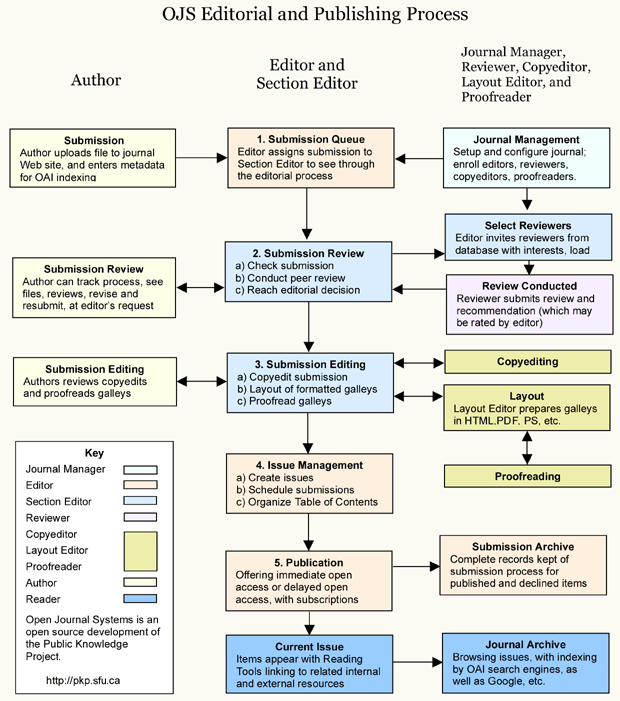
The process in detailsThe peer review process for journals involves at least three stages.
1. The desk evaluation stage
When a paper is submitted to a journal, it receives an initial evaluation by the chief editor, or an associate editor with relevant expertise.
At this stage, either can “desk reject” the paper: that is, reject the paper without sending it to blind referees. Generally, papers are desk rejected if the paper doesn’t fit the scope of the journal or there is a fundamental flaw which makes it unfit for publication.
In this case, the rejecting editors might write a letter summarising his or her concerns. Some journals, such as the The USA Journals, desk reject up to two-thirds or more of the papers.
2. The blind review
If the editorial team judges there are no fundamental flaws, they send it for review to blind referees. The number of reviewers depends on the field: in finance there might be only one reviewer, while journals in other fields of social sciences might ask up to four reviewers. Those reviewers are selected by the editor on the basis of their expert knowledge and their absence of a link with the authors.
Reviewers will decide whether to reject the paper, to accept it as it is (which rarely happens) or to ask for the paper to be revised. This means the author needs to change the paper in line with the reviewers’ concerns.
Usually the reviews deal with the validity and rigour of the empirical method, and the importance and originality of the findings (what is called the “contribution” to the existing literature). The editor collects those comments, weights them, takes a decision, and writes a letter summarising the reviewers’ and his or her own concerns.
It can therefore happen that despite hostility on the part of the reviewers, the editor could offer the paper a subsequent round of revision. In the best journals in the social sciences, 10% to 20% of the papers are offered a “revise-and-resubmit” after the first round.
3. The revisions – if you are lucky enough
If the paper has not been rejected after this first round of review, it is sent back to the author(s) for a revision. The process is repeated as many times as necessary for the editor to reach a consensus point on whether to accept or reject the paper. In some cases this can last for several years.
Ultimately, less than 30% of the submitted papers are accepted in the best journals in the social sciences. The renowned journal The USA Journals around 7% of the submitted papers.
Strengths and weaknesses of the peer review processThe peer review process is seen as the gold standard in science because it ensures the rigour, novelty, and consistency of academic outputs. Typically, through rounds of review, flawed ideas are eliminated and good ideas are strengthened and improved. Peer reviewing also ensures that science is relatively independent.
Because scientific ideas are judged by other scientists, the crucial yardstick is scientific standards. If other people from outside of the field were involved in judging ideas, other criteria such as political or economic gain might be used to select ideas. Peer reviewing is also seen as a crucial way of removing personalities and bias from the process of judging knowledge.
Despite the undoubted strengths, the peer review process as we know it has been criticised. It involves a number of social interactions that might create biases – for example, authors might be identified by reviewers if they are in the same field, and desk rejections are not blind.
It might also favour incremental (adding to past research) rather than innovative (new) research. Finally, reviewers are human after all and can make mistakes, misunderstand elements, or miss errors.
Peer-reviewer responsibilities toward the authorReviewers are primarily employed to go through the research papers submitted by the authors for publishing. Their prime object is to find discrepancies in those papers. They give their valuable opinions in an article. They have to assess the manuscripts thoroughly. If there are some changes or enhancements required for the journal, they have to report it to the author in their written report about the changes. Their feedback on the author’s works is required to be unbiased and devoid of any conflict of interest. Any unethical demerits found in the manuscripts need to be reported to the author with the proper and sufficient recommendations.
The peer-reviewers have to take it into account that their suggestions and opinions should not be very much personal, informal and unprofessional. Moreover, any reporting about the article should not be so much particular as there may be much criticism than opinions.
Under this process of reviewing two major perspectives are important to be looked after - the language and the confidentiality of the article. Most of the authors always meditate much about his works of scholarly knowledge. The secrecy of the author’s works is paramount. Any unethical use or the revelation of the manuscripts without the consent of the author is somewhat derogatory. It is next to the breach of confidence that the author maintains in the reviewer. Second, if the researched papers based on any scientific theory are not well-drafted in the article so it seems drab for the readers to read.
Peer-reviewer responsibilities toward editorsThe role of the peer-reviewer suggests that the reviewer has his responsibility towards the editor. As the editor is an important decision-maker of the journal publication so the reviewer is required to ensure he facilitates him in forming profound articles at the best of his capacity. The time is the key in journal publication as there are millions of researches that are submitted every day. Therefore timely notification to the editor by the reviewer makes it easy for the editor to complete the article in time.
The journal publication has some clear set of guidelines by the various reputed institutions. These guidelines direct the reviewer to report immediately to the editor if there is a financial conflict of interest. These directives from these guidelines advise the reviewer to provide insightful and constructive views. Even if there is any critique found in the reviewing documents, it should be informative and helpful. This can be done by providing additional information to the editor with the proposed references. This can be helpful for the journal editor to bring about quality articles for the readers. Therefore recommendations based on scientific merits should be made while remaining in the scope of the publication guidelines.
Peer Review Statement
The American Journal of Veterinary Sciences and Wildlife Discovery is an international, evaluated by experts of the journal which publishes high quality, unique research contributions toward scientific knowledge. Every manuscript submissions are the focus to an initial assessment by the Editor, as well as, if found appropriate for more reflection, to peer review in independent, anonymous proficient referees. Every peer review is double blind as well as the submission is online by the use of ScholarOne Manuscripts.
Privacy Statement
The names and email addresses entered in this journal site will be used exclusively for the stated purposes of this journal and will not be made available for any other purpose or to any other party.